

Pseudomyxoma Peritonei (PMP) is a diffuse malignancy characterized by proliferation of mucin-producing epithelial adenocarcinoma in the peritoneal cavity. Standard of care for PMP is cytoreductive surgery and organ resection followed by intraperitoneal hyperthermic chemoperfusion (HIPEC), with substantial patient burden and post-surgical recovery. While 5-year and 10-year disease-free survival following treatment are approximately 80% and 70%, respectively, efficacious treatment options for patients with unresectable or recurrent disease are limited.
Aided by docking simulation, a computational technique which predicts how drugs bind to target proteins, there is opportunity to improve standard of care for abdominal adenocarcinomas by discovering and developing well tolerated therapeutic drug candidates for maintenance therapy. In this study, taxane and benzimidazole compounds were screened using computational analysis to evaluate their binding affinity with the alpha subunit of G protein Gs (GSA), which initiates pro-mitotic cell signaling implicated in PMP, and β-tubulin (TUBB), a component of cell microtubules necessary for division. Initial broad screening of binding affinities in GSA and TUBB was performed, selecting Mebendazole as the highest combined activity in both GSA and TUBB and Ivermectin for greater affinity than established taxane therapeutic compounds in TUBB.
These results were further confirmed by exhaustive search with Mebendazole, Ivermectin, and Paclitaxel, which demonstrate potential for greater therapeutic activity and tolerability of Mebendazole and Ivermectin in treatment of PMP.
Gs alpha subunit – Mutations of the GNAS gene encoding GSA at codons R201C and R201H lead to the constitutive activation of the Gsα protein in PMP. This activation of the G protein-coupled receptor complexes, initiated by the endogenous ligand guanosine diphosphate (GDP) stimulates adenylate cyclase, increasing the production of cyclic AMP (cAMP). Elevated cAMP levels activate protein kinase A (PKA), triggering continuous downstream signalling. This signalling cascade promotes uncontrolled production of mucin and cell proliferation. Consequently, Gsα emerges as a critical target in our research, underscoring its significance in the pathophysiology of PMP. The crystallographic structure of GSA and the binding site for GDP were used for compound screening (Table 2).
β-tubulin – Cell division requires formation of microtubule complexes, composed of α-tubulin (TUBA) and TUBB polymers catalyzed by the de-phosphorylation of guanosine triphosphate (GTP) to GDP. Taxol therapeutic drugs exert antineoplastic effects by binding to TUBB subunits within microtubules, stabilizing them and inhibiting their dynamic reorganization and polymerization. This stabilization results in mitotic arrest, preventing cells from progressing through the cell cycle, inducing programmed cell death and inhibiting cellular proliferation. Multiple binding sites with the TUBB dimer were screened (Table 2): the GDP binding site at the leading edge as the polymer complex is assembled (monomer), the resulting complex (dimer), as well as known surface binding sites for microtubule stabilizing taxol drugs (Taxol binding site A/B). Endogenous activity of GDP and GTP at monomer and dimer sites is necessary for cell division and binding of therapeutic drugs to these sites disrupt formation of the TUBA/TUBB complex, halting proliferation of cancer cells.
Preclinical research, clinical studies, and FDA approval of taxane compounds have demonstrated the efficacy of tubulin-binding compounds in disrupting proliferation of adenocarcinomas. However, taxanes also exhibit significant treatment-limiting side effects.
Building upon this foundation, we focused the study on well-tolerated anthelmintic drugs for potential repurposing (Table 1).
The endogenous, high-affinity ligand guanosine diphosphate (GDP) was used as a reference value to screen binding affinity of therapeutic candidates.
| Compound | Pubchem ID |
|---|---|
| GDP | 135398619 |
| Sulisobenzone | 19988 |
| Albendazole | 2082 |
| Benzophenone | 3102 |
| Paclitaxel | 36314 |
| Mebendazole | 4030 |
| Oxybenzone | 4632 |
| 7-Epi Paclitaxel | 4666 |
| Colchicine | 6167 |
| Ivermectin | 6321424 |
| Metrafenone | 6451057 |
| Mexenone | 71645 |
| Dioxybenzone | 8569 |
| Tetrahydroxybenzophenone | 8571 |
Table 1 – Compounds selected for initial screening
The GSA protein and multiple binding sites of TUBB were identified as potential therapeutic targets and their crystallographic structures in native conformations were obtained. A molecular docking screen was performed to cross-validate potential drug repurposing for these therapeutic targets.
The candidate compound set included Mebendazole, taxanes, Ivermectin and the endogenous ligand GDP. AutoDock VINA was used to predict binding affinities, expressed as Gibbs free energy (dG, kcal/mol). The objective was to identify drug-like binding affinities with dG < -7.9 kcal/mol, indicating potential therapeutic sub-micromolar ligand-target interactions at sub-micromolar concentrations. The exhaustion parameter was set to 10 for three replicates of initial screening of all compounds, with subsequent refinement with exhaustion set to 30 for eight replicates of selected compounds and comparison for statistically significant differences using Tukey’s HSD test.
Using GDP binding affinities as reference, it demonstrated the highest affinity for all screened targets, with mean dG values for the following targets: -10.95 for the Gs alpha subunit, -9.93 for the dimer binding site of TUBB, and -7.63 for the monomer binding site of TUBB.
Ligand conformations are generated using RDKit (ver. 2022.9.3) and docked using Autodock VINA (ver. 1.2.5). The Top-1 predicted binding affinities from each iteration are reported, with ‘N/A’ indicating no binding when binding of larger ligand molecules to a sterically hindered binding site is impossible. Protein structure PDB file, binding site coordinates (x, y, z), and bounding box sizes (x, y, z), are reported below (Table 2).
| GSA | TUBB |
|---|---|
| https://www.rcsb.org/structure/6au6 | https://www.rcsb.org/structure/5ij0 |
| GDP binding site coordinates – (-4, -3, -16) |
Tubulin binding site (dimer) – (437, 384, 334) Tubulin binding site (monomer) – (442, 382, 377) Taxol binding site A – (428, 369, 354) Taxol binding site B – (421, 379, 379) |
| GDP bounding box size – (22, 56, 20) | Tubulin bounding box size – (30, 30, 30) |
Mebendazole emerged as the best-performing drug candidate overall
In preliminary screening, Mebendazole demonstrated the highest mean binding affinity of screened compounds in GSA (-9.66) and the TUBB dimer (-9.94), while Paclitaxel showed the highest mean affinity for the taxol binding sites(-7.97). Ivermectin demonstrated the highest TUBB monomer (-7.80) and Top-3 mean binding affinity for Taxol binding sites (-7.86). Based on these initial screening results, Mebendazole, Paclitaxel, and Ivermectin were selected for further exhaustive ligand docking simulation. The mean predicted binding affinities from follow-up docking (Table 3) were further compared to determine statistically significant differences, with correction for multiple-comparisons using Tukey’s HSD test (Figure 1). Mebendazole’s overall performance across these critical targets, especially the Gs alpha subunit and tubulin dimer, indicates a robust potential to disrupt key cellular processes involved in PMP progression.
| GSA | Tubulin, monomer | Tubulin, dimer | Taxol binding site A | Taxol binding site B | |
|---|---|---|---|---|---|
| GDP | -10.98 | -7.93 | -10.00 | -7.16 | -7.44 |
| Mebendazole | -10.28 | -7.48 | -9.91 | -7.19 | -7.18 |
| Paclitaxel | -7.70 | -7.03 | N/A | -7.93 | -7.86 |
| Ivermectin | -7.50 | -8.01 | N/A | -8.15 | -7.91 |
Table 3 – Mean predicted binding affinities in follow-up exhaustive ligand docking screen
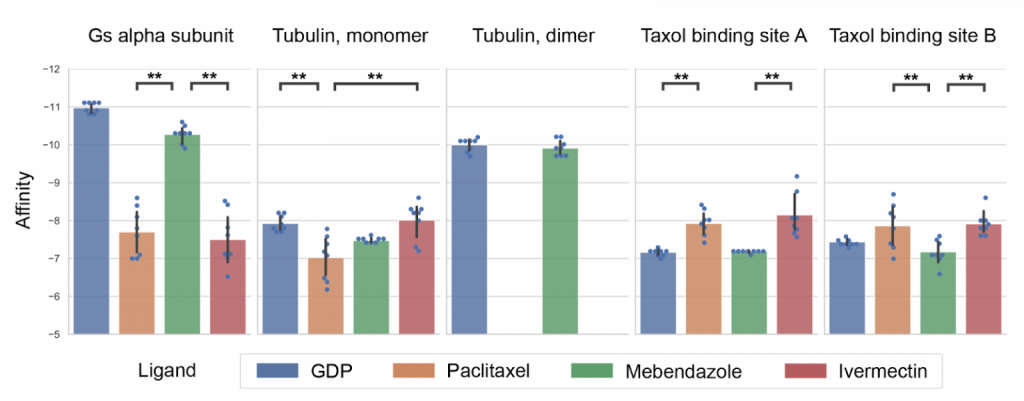
Figure 1 – Predicted binding affinities with 99% confidence interval for mean and selected statistical comparisons. (**) : Significant difference at p-value < 0.01.
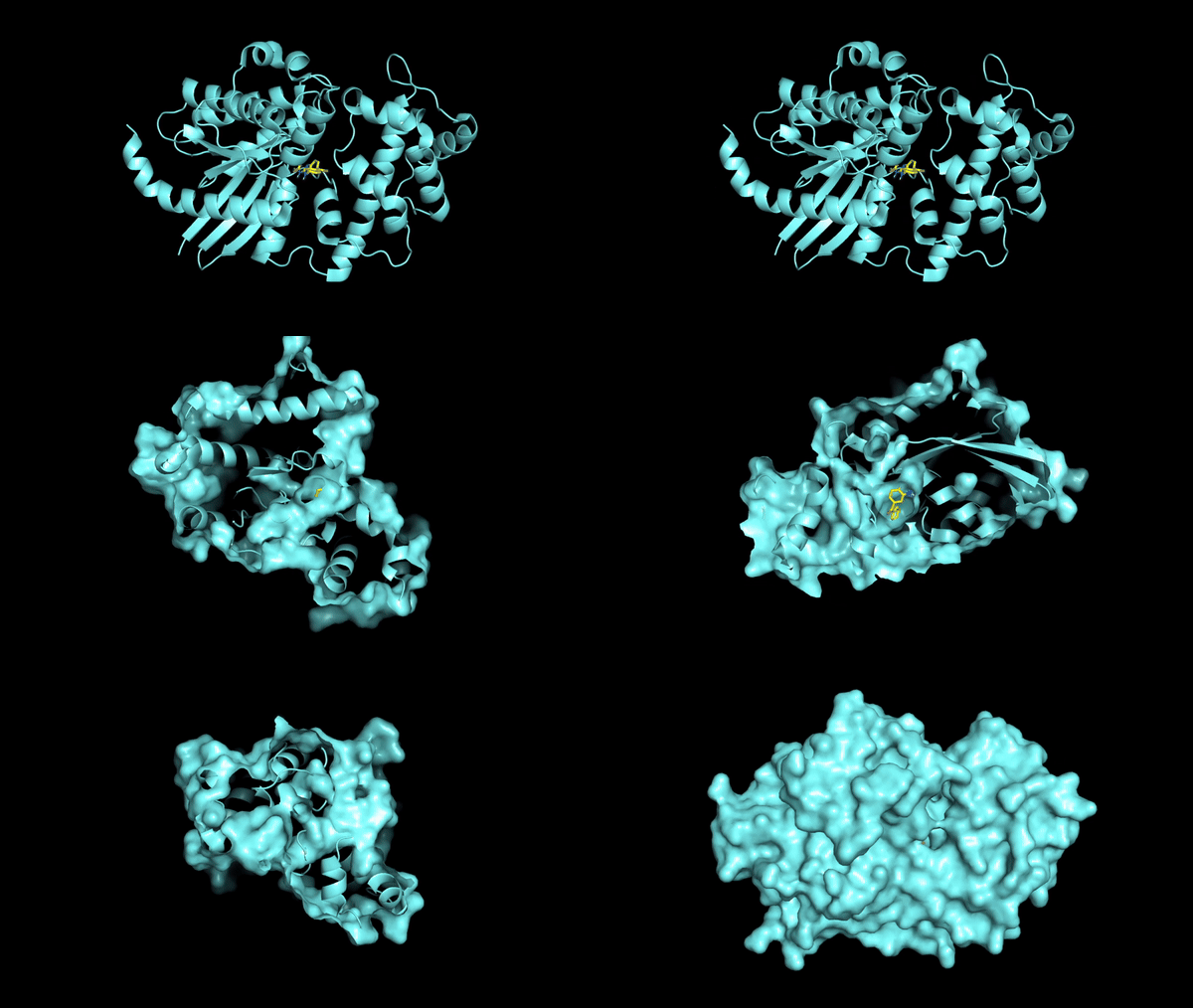
Mebendazole bound to Gs alpha subunit, GDP binding site
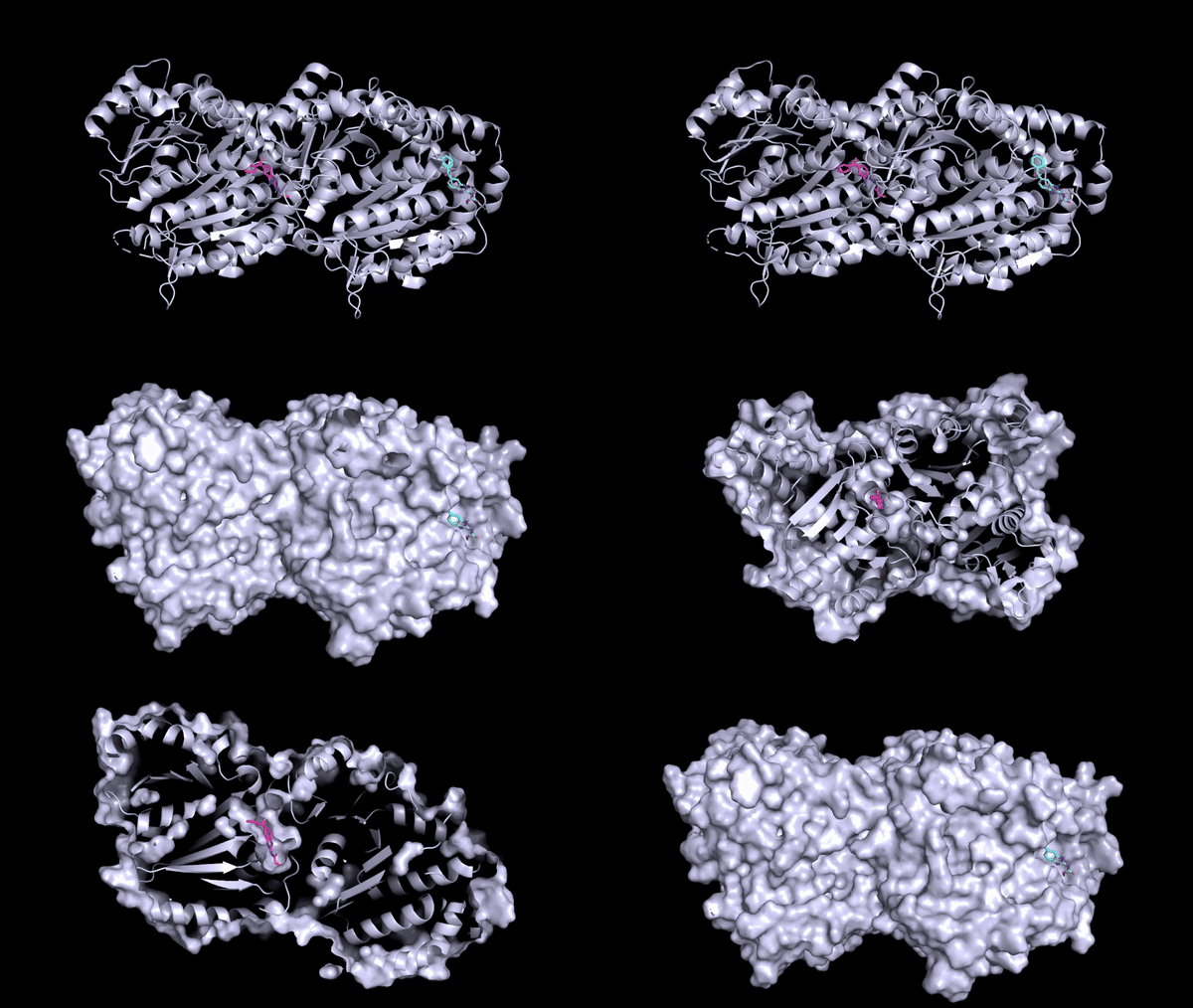
Mebendazole bound to tubulin, dimer and monomer sites
In conclusion, this study highlights the promising potential of Mebendazole as a multi-mechanistic therapeutic agent for Pseudomyxoma Peritonei (PMP). Through docking simulations, Mebendazole demonstrated superior binding affinities to critical targets such as the Gs alpha subunit and tubulin dimer, surpassing established chemotherapeutic agent Paclitaxel. The robust binding affinity of Mebendazole to these targets suggests its capability to disrupt key cellular processes involved in PMP progression however, though the predicted binding indicate favorable drug-like properties drawbacks include the rigid target conformations and constrained search space for potential interactions. These findings advocate for preclinical and clinical investigations into dosing, bioavailability, and therapeutic efficacy of Mebendazole in managing this challenging malignancy.
RDKit
RDKit is open-source toolkit for cheminformatics. It was developed by Greg Landrum with numerous additional contributions from the RDKit open source community. It has an application programming interface for Python, Java, C++, and C#. https://www.rdkit.org/
AutoDock Vina:
AutoDock Vina is an open-source program for doing molecular docking. It was originally designed and implemented by Dr. Oleg Trott in the Molecular Graphics Lab (now CCSB) at The Scripps Research Institute. https://vina.scripps.edu/
Protein Data Bank:
RCSB Protein Data Bank (RCSB PDB) enables breakthroughs in science and education by providing access and tools for exploration, visualization, and analysis of Experimentally-determined 3D structures from the Protein Data Bank (PDB) archive Computed Structure Models (CSM) from AlphaFold DB and ModelArchive These data can be explored in context of external annotations providing a structural view of biology. https://www.rcsb.org/
PubChem:
PubChem mostly contains small molecules, but also larger molecules such as nucleotides, carbohydrates, lipids, peptides, and chemically-modified macromolecules. We collect information on chemical structures, identifiers, chemical and physical properties, biological activities, patents, health, safety, toxicity data, and many others.
https://pubchem.ncbi.nlm.nih.gov/
AlphaFold Server:
AlphaFold Server is a web-service that can generate highly accurate biomolecular structure predictions containing proteins, DNA, RNA, ligands, ions, and also model chemical modifications for proteins and nucleic acids in one platform. It’s powered by the newest AlphaFold 3 model. https://alphafoldserver.com/about
How successful are AI-discovered drugs in clinical trials:
Madura KP Jayatunga, Margaret Ayers, Lotte Bruens, Dhruv Jayanth, Christoph Meier, How successful are AI-discovered drugs in clinical trials? A first analysis and emerging lessons, Drug Discovery Today, Volume 29, Issue 6, 2024, 104009, ISSN 1359-6446, https://doi.org/10.1016/j.drudis.2024.104009.
Lin, YL., Ma, R. & Li, Y. The biological basis and function of GNAS mutation in pseudomyxoma peritonei: a review. J Cancer Res Clin Oncol 146, 2179–2188 (2020). https://doi.org/10.1007/s00432-020-03321-8
Flatmark, K., Torgunrud, A., Fleten, K. G., Davidson, B., Juul, H. V., Mensali, N., Lund-Andersen, C., & Inderberg, E. M. (2021). Peptide vaccine targeting mutated GNAS: a potential novel treatment for pseudomyxoma peritonei. Journal for immunotherapy of cancer, 9(10), e003109. https://doi.org/10.1136/jitc-2021-003109
Murage, N.W., Ahmed, N.M., Underwood, T.J. et al. The genetic profile and molecular subtypes of human pseudomyxoma peritonei and appendiceal mucinous neoplasms: a systematic review. Cancer Metastasis Rev 42, 335–359 (2023). https://doi.org/10.1007/s10555-023-10088-0
Ichiaki Ito, Abdelrahman M.G. Yousef, Saikat Chowdhury, Princess N. Dickson, Zahra A. Naini, Michael G. White, Karianne G. Fleten, Kjersti Flatmark, Keith F. Fournier, Natalie W. Fowlkes, John Paul Shen; Intraperitoneal Paclitaxel Is a Safe and Effective Therapeutic Strategy for Treating Mucinous Appendiceal Adenocarcinoma. Cancer Res 1 October 2023; 83 (19): 3184–3191. https://doi.org/10.1158/0008-5472.CAN-23-0013
